Choosing the right plastic for your custom plastic tokens or plastic custom coins is one of the most critical decisions you’ll make. It directly impacts the look, feel, durability, safety, and, ultimately, the cost of your project. With so many options—ABS, Acrylic, Polypropylene—it’s easy to feel overwhelmed. This guide is here to demystify the process. We’ll break down the key properties of the most common materials, helping you match the perfect plastic to your token’s specific application, whether it’s for a high-traffic casino, a promotional giveaway, or a food-contact item. Think of this as your roadmap to making an informed, cost-effective choice.
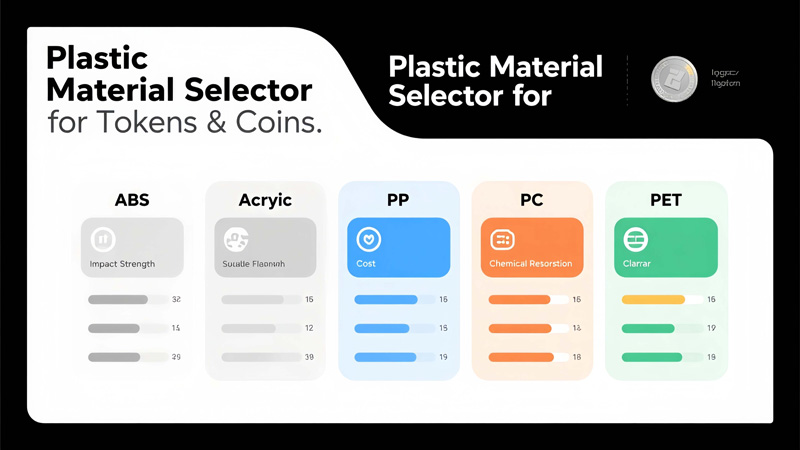
Head-to-Head: Comparing Common Plastic Materials
Let’s dive into the specifics. Each material has a unique personality, making it ideal for different scenarios. In our experience, about 80% of custom made plastic coins and tokens use one of the following three materials.
- ABS (Acrylonitrile Butadiene Styrene): The All-RounderWidely used and for good reason. ABS offers an excellent balance of strength, rigidity, and surface finish. It’s highly versatile, easy to mold with sharp detail (perfect for custom embossed plastic tokens), and accepts painting, printing, and metal plating beautifully. It’s cost-effective for both small and custom plastic coins bulk orders. The downside? It’s not inherently UV stable (can yellow outdoors) and isn’t food-grade unless specified. We recommend ABS for most indoor promotional tokens, arcade coins, and membership cards.
- Acrylic (PMMA): The Crystal-Clear ChoiceIf you desire brilliant clarity and a glass-like, premium appearance, acrylic is unmatched. It has excellent optical properties and good weather resistance. It’s the go-to material for luxury custom plastic gold coins used as awards or collectibles where sparkle is key. However, it is more brittle than ABS and can scratch more easily. Compared with ABS, it’s also typically more expensive. It’s suitable for items where visual appeal is paramount over extreme durability.
- Polypropylene (PP): The Flexible & Chemical-Resistant WorkhorsePP is lightweight, has excellent chemical resistance, and, notably, a “living hinge” property that allows for some flex without breaking. This makes it durable in a different way. It can be made in food-grade formulations. The surface can be waxy, sometimes making adhesion for printing trickier. It is advisable to consider PP for tokens that might encounter oils, detergents, or require repeated flexing.
Food-Grade vs. Industrial-Grade: A Critical Distinction
This is a non-negotiable safety consideration. If your custom plastic tokens will ever come into contact with food or drink—think custom plastic drink tokens for bars or tokens used in cafeteria systems—you must specify food-grade materials. Industrial-grade plastics may contain additives (like certain flame retardants or plasticizers) that are not approved for food contact and could leach harmful substances.
- Food-Grade Plastics: These comply with regulations like FDA (USA) or EU 10/2011. Common food-safe choices include specific grades of PP, HDPE, and PET. They are formulated to be non-toxic and resistant to leaching.
- Industrial-Grade Plastics: Standard ABS or acrylic falls here. They are perfectly safe for handling but not for direct, prolonged food contact.
Our advice? Always err on the side of caution. If there’s any chance the token will touch food, specify food-grade. The marginal cost increase is insignificant compared to the risk. Discuss this with your manufacturer during the design evaluation phase.
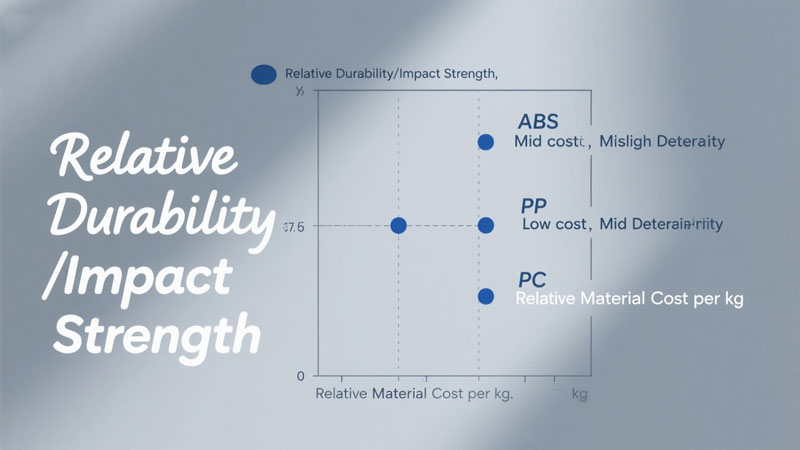
Striking the Perfect Balance: Durability vs. Cost
How much does it cost to make a custom coin? A huge part of the answer lies in material choice. As a general observation, you often get what you pay for, but smarter choices can optimize value.
- For Maximum Durability on a Budget: ABS is your champion. It provides excellent impact resistance and surface hardness for its price, making it the default for long-lasting custom printed plastic tokens.
- When Clarity is Worth a Premium: Acrylic costs more but delivers a premium look that can justify a higher price point for your end product.
- Considering Total Cost of Ownership: A slightly more expensive, more durable token (e.g., using a stronger grade) may last three times as long as a cheaper one, reducing replacement frequency and ultimately lowering your long-term cost. This is where partnering with an expert in injection molding pays off—they can guide this analysis.
Finishing Touches: Surface Treatment & Decoration Options
The base material sets the stage, but surface treatments bring your custom plastic tokens to life. The good news is that all the materials discussed accept various finishes.
- Pad Printing: Excellent for multi-color, detailed logos on curved surfaces. Works well on ABS and acrylic.
- Hot Stamping: Creates a metallic, foil-like finish. Perfect for adding a luxurious sheen to custom plastic gold coins.
- Laser Engraving/Marking: Provides a permanent, wear-resistant mark. Ideal for serial numbers or intricate patterns.
- Texture: The mold itself can be textured (e.g., leather, linen) to give the token a unique feel and hide minor handling scratches.
It is clear that the choice of material can affect the final finish. For instance, acrylic’s clarity makes underlying laser engravings pop, while ABS provides a smooth canvas for crisp printing.
Real-World Application Scenarios: Making the Match
Let’s put theory into practice. Industry practice indicates these are reliable pairings:
- Casino/Chip Tokens (High-Handling, Premium Feel): Core: ABS or a Composite. Finish: Often weight-added, with multi-color printing and textured edges.
- Promotional Giveaway Coins (Cost-Sensitive, Good Looks): Core: ABS. Finish: Single or two-color pad printing in vibrant colors.
- Food & Beverage Tokens (Safety First): Core: Food-Grade PP or HDPE. Finish: Laser marking or food-safe inks for printing.
- Award/Commemorative Coins (Visual Impact): Core: Acrylic or clear ABS. Finish: Hot stamping with gold/silver foil, possibly with inset printed inserts.
Case Study: A UK-Based Loyalty Program Startup
Client: “CoinClub,” a subscription box and loyalty program startup based in London, UK.
Challenge: They needed their flagship custom made plastic coins to feel substantial and premium for unboxing videos, yet be cost-effective for their custom plastic coins no minimum initial run of just 5,000 pieces. They also wanted a metallic gold appearance.
Our Solution: We advised against solid acrylic (too costly) or metal plating (expensive for low volume). Instead, we proposed a highly versatile gold-colored ABS resin. This gave a consistent metallic hue throughout the token. We then used a textured mold surface (fine linen) to create a sophisticated feel that hid fingerprints and a precision custom embossed logo. For their custom plastic tokens UK market, this solution projected quality while keeping unit costs manageable for a startup.
The Result: The client was thrilled. The founder stated: “We thought a premium look meant a premium price. DTG TECH showed us how smart material and finish selection could achieve our vision on a startup budget. The coins look and feel expensive, and our community loves them.” This project is a great example of our client-focused approach.
Frequently Asked Questions (FAQs)
Q1: What is the most durable plastic for tokens that will be used daily?
A: For overall balance of impact resistance, scratch resistance, and cost, ABS is typically the best choice. For extreme durability where cost is less concern, Polycarbonate (PC) is even stronger but more expensive. The design (edge thickness, etc.) also plays a huge role in durability.
Q2: Can I get a sample to feel the material before placing a large order?
A: Absolutely. Any reputable manufacturer should offer prototyping services. This allows you to test different materials, finishes, and weights. It’s a small investment that ensures your final custom plastic coins bulk order is perfect.
Q3: I have a design but don’t know which material is best. Can you help?
A: Yes, this is a core part of our service! During the initial quote and discussion phase, our engineers review your design, intended use, and budget to recommend the optimal material. We consider factors you might not have thought of, like wall thickness for molding or the best surface for your chosen decoration.
Make an Informed Decision with Expert Guidance
Choosing the right material for your custom plastic tokens is a strategic decision that affects aesthetics, functionality, safety, and budget. We believe that an educated client makes the best partner. By understanding the core options—ABS for versatility, Acrylic for clarity, PP for flexibility and food safety—you are now equipped to start a more productive conversation with your manufacturer.
Ultimately, the best choice comes from combining your vision with technical expertise. At DTG TECH, we bridge that gap.
Ready to bring your token concept to life with the perfect material?
- Review our portfolio of custom plastic tokens and coins for inspiration.
- Use this guide to narrow down your material preferences.
- Contact us for a professional consultation and precise quote tailored to your needs.
Don’t leave your project’s success to chance. Reach out to the DTG TECH team today and let’s build something great together.
Post time: Dec-17-2025


